SoylentNews is people
SoylentNews
Site News
Join our Folding@Home team:
Main F@H site
Our team page
Support us: Subscribe Here
and buy SoylentNews Swag
We always have a place for talented people, visit the Get Involved section on the wiki to see how you can make SoylentNews better.
- [khallow] Lessons from evolution?
- [Rich] Zero Local Trust?
- [janrinok] Supreme Court strikes down Trump's sweeping tariffs
- [c0lo] Living on minimal wage
- [Gaaark] It's AI all the way down!
- [mcgrew] EV Myths
- [Runaway1956] geopricing
- [turgid] 4G Internet
- [hubie] GOG Galaxy is Apparently to be Ported to Linux
- [fliptop] Massive Solar Farm Approved in Middle of NY Amish Country
- [Tork] RubyAI's insta-Casettes.. second vid added!
- [Arthur T Knackerbracket] US Pediatricians Give Middle Finger To RFK Jr.
- [Mojibake Tengu] Veterans on Sale
- [bzipitidoo] battling high blood pressure
- [canopic jug] 39C3: Power Cycles Streaming (Saturday through Tuesday)
Older Stuff
-
June 9- Computer Independently Solves 120-Year-Old Biological Mystery (25)
- 20 Billion Nanoparticles Inserted Into Mouse Brains (4)
- Rick Santorum Wants Pope Francis To Stop Talking About Climate Change (109)
- Planetary Society's LightSail Has Finally Deployed After Multiple Setbacks (19)
- NASA's Low-Density Supersonic Decelerator June 8 Test (4)
- OS X "El Capitan", Swift, Apple Music, and More at WWDC (55)
- Airbus Working on Re-Usable Successor to Ariane Rocket (19)
- Netflix: The Crumbling Borders of Geolocation and the Thieves Who Happily Pay for What They "Steal" (50)
- HackerOne Connects Hackers With Companies, and Hopes for a Win-Win (8)
- How MIT Students Won $8 Million in the Massachusetts Lottery (46)
- MERS Outbreak and Quarantines in South Korea (31)
- Lawyer Who Sued EFF Blames Ars Technica Readers for Hacking, Defamation (44)
-
June 8
Quick Links

from the remember-when-they-said-spinning-drives-were-finished? dept.

Western Digital subsidiary HGST has announced the Ultrastar Archive Ha10, a 10 terabyte helium-filled shingled magnetic recording (SMR) hard disk drive. It rotates at 7,200 RPM and has a 256MB cache.
HGST has also released libzbc, "a simple library providing functions for manipulating disks supporting the Zoned Block Command (ZBC) and Zoned-device ATA command set (ZAC)."
The new drive is intended for enterprise bulk storage that is infrequently accessed. SMR tracks are partially overlapped which can hurt drive performance. The Ha10 has lower sequential write speeds than the He8. Seagate has already released 8 TB SMR drives.
What's next? 12 TB? 16 TB? HAMR?
Original Submission
- Read More...
- 41 comments
from the unintended-consequences-anyone? dept.

On Dark Web sites like the Silk Road black market and its discussion forums, anonymous visitors could write even the most extreme libertarian and anarchist statements without fear. The rest of the internet, as a few critics of the US judicial system may soon learn, isn't quite so free of consequences.
Last week the Department of Justice issued a grand jury subpoena to the libertarian media site Reason.com, demanding that it identify six visitors to the site. The subpoena letter, obtained and published by blogger Ken White, lists trollish comments made by those six Reason readers that—whether seriously or in jest—call for violence against Katherine Forrest, the New York judge who presided over the Silk Road trial and late last month sentenced Silk Road creator Ross Ulbricht to life in prison.
"It's judges like these that should be taken out back and shot," wrote one user named Agammamon, in a comment thread that has since been deleted from Reason.com's story on Ulbricht's sentencing.
"It's judges like these that will be taken out back and shot," answered another user named Alan.
"Why do it out back? Shoot them out front, on the steps of the courthouse," reads a third comment from someone going by the name Cloudbuster.
The subpoena calls for Reason.com to hand over data about the six users, including their IP addresses, account information, phone numbers, email addresses, billing information, and devices associated with them. And it cites a section of the United States criminal code that forbids "mailing threatening communications." When those communications threaten a federal judge, they constitute a felony punishable by as much as 10 years in prison. (The average internet user has no such protection.)
The Streisand Effect lives.
Original Submission
- Read More...
- 54 comments
from the good-thing-no-one-was-jaywalking dept.

According to reporting in AlterNet, the Denver Channel, Westword, and others:
A standoff between SWAT team members and an armed shoplifting suspect who barricaded himself in a Greenwood Village home ended, but now the home owner thinks police destroyed his house. Greenwood Village Police said the 19-hour standoff ended with no injured officers or citizens, but the home looks like a bomb went off.
There is a large hole in the front of the house, broken windows and glass are littered everywhere and shrapnel is stuck in the walls. Leo Lech said, "It looks like Osama Bin Laden's compound." Lech is no terrorist but an unlucky homeowner whose property was caught in the cross fire when the suspect broke into the home. A 9-year-old child who was in the home at the time was able to escape.
Greenwood Village Police say that the suspect had four active warrants out for narcotics and had a large amount of narcotics with him. The suspect tried to steal a car at the home and fired at police from the garage, Greenwood Village Police say. Negotiations with the suspect failed after police met two of the suspect's three demands, but the suspect severed communications with police. Police used explosives and a ramming device to gain entry into the home after negotiations failed.
"This is a complete atrocity," said Lech. "This is a paramilitary force used in a civilian environment ... for one gunman? To use this kind of power?" Lech said the Greenwood Village Police Department claimed it was not responsible and the city would not return his calls.
Additional sources:
Original Submission
- Read More...
- 110 comments

Nature has a comprehensive analysis and history of CRISPR (Clustered Regularly Interspaced Short Palindromic Repeats), the disruptive technique that is allowing genetic engineering and gene therapy to flourish:
CRISPR methodology is quickly eclipsing zinc finger nucleases and other [genetic] editing tools (see 'The rise of CRISPR'). For some, that means abandoning techniques they had taken years to perfect. "I'm depressed," says Bill Skarnes, a geneticist at the Wellcome Trust Sanger Institute in Hinxton, UK, "but I'm also excited." Skarnes had spent much of his career using a technology introduced in the mid-1980s: inserting DNA into embryonic stem cells and then using those cells to generate genetically modified mice. The technique became a laboratory workhorse, but it was also time-consuming and costly. CRISPR takes a fraction of the time, and Skarnes adopted the technique two years ago.
Researchers have traditionally relied heavily on model organisms such as mice and fruit flies, partly because they were the only species that came with a good tool kit for genetic manipulation. Now CRISPR is making it possible to edit genes in many more organisms. In April, for example, researchers at the Whitehead Institute for Biomedical Research in Cambridge, Massachusetts, reported using CRISPR to study Candida albicans, a fungus that is particularly deadly in people with weakened immune systems, but had been difficult to genetically manipulate in the lab. Jennifer Doudna, a CRISPR pioneer at the University of California, Berkeley, is keeping a list of CRISPR-altered creatures. So far, she has three dozen entries, including disease-causing parasites called trypanosomes and yeasts used to make biofuels.
Yet the rapid progress has its drawbacks. "People just don't have the time to characterize some of the very basic parameters of the system," says Bo Huang, a biophysicist at the University of California, San Francisco. "There is a mentality that as long as it works, we don't have to understand how or why it works." That means that researchers occasionally run up against glitches. Huang and his lab struggled for two months to adapt CRISPR for use in imaging studies. He suspects that the delay would have been shorter had more been known about how to optimize the design of guide RNAs, a basic but important nuance.
Original Submission
- Read More...
- 7 comments
A primatologist has found signs of a canine-primate relationship similar to humanity's domestication of wolves:
In the alpine grasslands of eastern Africa, Ethiopian wolves and gelada monkeys are giving peace a chance. The geladas – a type of baboon – tolerate wolves wandering right through the middle of their herds, while the wolves ignore potential meals of baby geladas in favour of rodents, which they can catch more easily when the monkeys are present. The unusual pact echoes the way dogs began to be domesticated by humans, and was spotted by primatologist Vivek Venkataraman, at Dartmouth College in New Hampshire, during fieldwork at Guassa plateau in the highlands of north-central Ethiopia.
Even though the wolves occasionally prey on young sheep and goats, which are as big as young geladas, they do not normally attack the monkeys – and the geladas seem to know that, because they do not run away from the wolves. "You can have a wolf and a gelada within a metre or two of each other and virtually ignoring each other for up to 2 hours at a time," says Venkataraman. In contrast, the geladas flee immediately to cliffs for safety when they spot feral dogs, which approach aggressively and often prey on them.
When walking through a herd – which comprises many bands of monkeys grazing together in groups of 600 to 700 individuals – the wolves seem to take care to behave in a non-threatening way. They move slowly and calmly as they forage for rodents and avoid the zigzag running they use elsewhere, Venkataraman observed. This suggested that they were deliberately associating with the geladas. Since the wolves usually entered gelada groups during the middle of the day, when rodents are most active, he wondered whether the geladas made it easier for the wolves to catch the rodents – their primary prey. Venkataraman and his colleagues followed individual wolves for 17 days, recording each attempted capture of a rodent, and whether it worked. The wolves succeeded in 67 per cent of attempts when within a gelada herd, but only 25 per cent of the time when on their own.
Original Submission
- Read More...
- 22 comments
from the Budget-Fair-Queueing-AKA-getting-in-line-at-a-cheap-carnival? dept.

For years the BFQ (Budget Fair Queueing) I/O scheduler has been trying to get in the mainline kernel and it looks like they have an action plan for getting accepted upstream.
BFQ is a proportional-share I/O scheduler that shares a lot of code with the CFQ scheduler. The Completely Fair Queuing (CFQ) scheduler has long been part of the mainline tree but BFQ hasn't been pulled yet even after many revisions and code reviews. Despite that, it is used as a default I/O scheduler on several Linux distributions, such as Manjaro, OpenMandriva, Sabayon, or CyanoGenMod, for some devices.
While it doesn't look like it will be ready for the upcoming Linux 4.2 cycle, it appears BFQ getting accepted is becoming quite close (a Google Groups link).
A direct link to relevant lkml thread is http://lkml.org/lkml/2015/6/5/822.
Original Submission
- Read More...
- 28 comments
A group of scientists have called for a "moonshot" renewable energy research program called the "Global Apollo":
They say they have generated interest from major nations in their plan for an investment of 0.02% of their GDP [about $150 billion over 10 years, and about the cost of the Apollo program in 2015 dollars] into research, development and demonstration (RD&D) of clean electricity. Their report, launched at London's Royal Society, says on current projections the world will exceed the 2C danger threshold of climate change by 2035.
The academics are led by the UK's former chief scientist Professor Sir David King. He told BBC News: "We have already discovered enough fossil fuels to wreck the climate many times over. There's only one thing that's going to stop us burning it – and that's if renewables become cheaper than fossil fuels. "Under our plan, we are aiming to make that happen globally within a decade." Another of the authors, former Cabinet Secretary Lord O'Donnell, told BBC News: "People never believed we could put a man on the Moon - but we did. People don't believe we can solve climate change - but we have no choice."
It complains that renewable energy has been starved of investment to a shocking degree, with publicly funded RD&D on renewable energy only $6bn a year – under 2% of the total of publicly funded research and development. The authors say this compares poorly with the $101bn spent worldwide on production subsidies for renewables and the $550bn "counter-productive" subsidies for fossil fuel energy.
Solar is the most favoured renewable source as the group says it has greatest potential for technology breakthroughs, and most new energy demand will be in sunny countries. The cost of solar has been plummeting and is already approaching competitive prices in places as different as Germany, California and Chile. But the authors believe next-generation plastic photovoltaics can to keep prices tumbling. They believe battery technology is improving fast – but think batteries and other forms of storage need to be massively developed to store intermittent renewable energy. The authors say much smarter software is needed to enable electricity grids to cope with the new sources of power. Some experts believe that energy technology has developed so fast that it simply needs further price support to keep volumes rising and costs falling. Others will complain that the Apollo group has done little to tackle the immense problem of replacing fossil fuels in heating.
Original Submission
- Read More...
- 59 comments
Manu Prakash, an assistant professor of bioengineering at Stanford, and his students have developed a synchronous computer that operates using the unique physics of moving water droplets. Their goal is to design a new class of computers that can precisely control and manipulate physical matter.
[...] "In this work, we finally demonstrate a synchronous, universal droplet logic and control," Prakash said.
Because of its universal nature, the droplet computer can theoretically perform any operation that a conventional electronic computer can crunch, although at significantly slower rates. Prakash and his colleagues, however, have a more ambitious application in mind.
"We already have digital computers to process information. Our goal is not to compete with electronic computers or to operate word processors on this," Prakash said. "Our goal is to build a completely new class of computers that can precisely control and manipulate physical matter. Imagine if when you run a set of computations that not only information is processed but physical matter is algorithmically manipulated as well. We have just made this possible at the mesoscale."
Original Submission
- Read More...
- 20 comments
A 75 million-year-old dinosaur fossil -- and a poorly preserved one, at that -- may have yielded traces of intriguing soft tissue. Scientists believe they've spotted blood cells and collagen, the protein that makes up connective tissue in animals. Their findings were published Tuesday in Nature Communications.
Years ago, researcher Mary Schweitzer found what she believed were preserved blood vessels in a T. rex bone, a finding that has since been supported by molecular analysis. But unlike the specimen Schweitzer worked with, the fossils used in the new study were poorly preserved, which suggests that soft-tissue preservation might not be as uncommon as we'd thought. However, further evidence is needed to confirm that the structures are what they appear to be.
It's exciting to think that if we can find more like this we can greatly expand our understanding of how life on Earth has evolved on the most fundamental level, such as seeing if certain traits were selected for given the environmental conditions represented in the same strata the fossils came from.
Original Submission
- Read More...
- 15 comments

The White House Office of Management and Budget (OMB) has issued a directive that requires all publicly accessible federal Web sites to adopt HTTPS:
An HTTPS-Only standard will eliminate inconsistent, subjective determinations across agencies regarding which content or browsing activity is sensitive in nature, and create a stronger privacy standard government-wide. Federal websites that do not convert to HTTPS will not keep pace with privacy and security practices used by commercial organizations, and with current and upcoming Internet standards. This leaves Americans vulnerable to known threats, and may reduce their confidence· in their government. Although some Federal websites currently use HTTPS, there has not been a consistent policy in this area. An HTTPS-only mandate will provide the public with a consistent, private browsing experience and position the Federal Government as a leader in Internet security.
United States Chief Information Officer Tony Scott adds:
Per the issuance of this Memorandum, all publicly accessible Federal websites must meet the HTTPS-Only Standard by December 31st of 2016.
OMB first proposed the HTTPS-Only Standard in March and requested comment from the public. During the feedback period, OMB's proposal received numerous comments and suggestions from Internet's standards bodies, popular web browsers, and concerned citizens. To assist with the conversion to HTTPS, technical assistance and best-practices for migration are available at https://https.cio.gov – a site that is open to contribution from technical experts around the world. Finally, a public dashboard has been constructed to monitor progress.
Original Submission
- Read More...
- 12 comments

BBC reports that Germany has abandoned tuition fees altogether for German and international students alike and more than 4,600 US students are fully enrolled at Germany universities, an increase of 20% over three years. "When I found out that just like Germans I'm studying for free, it was sort of mind blowing," says Katherine Burlingame who decided to get her Master's degree at a university in the East German town of Cottbus. "I realised how easy the admission process was and how there was no tuition fee. This was a wow moment for me." When Katherine came to Germany in 2012 she spoke two words of German: 'hallo' and 'danke'. She arrived in an East German town which had, since the 1950s, taught the majority of its residents Russian rather than English. "At first I was just doing hand gestures and a lot of people had compassion because they saw that I was trying and that I cared." She did not need German, however, in her Master's program, which was filled with students from 50 different countries but taught entirely in English. In fact, German universities have drastically increased all-English classes to more than 1,150 programs across many fields.
So how can Germany afford to educate foreign students for free? Think about it this way: it's a global game of collecting talent. All of these students are the trading cards, and the collectors are countries. If a country collects more talent, they'll have an influx of new ideas, new businesses and a better economy. For a society with a demographic problem - a growing retired population and fewer young people entering college and the workforce - qualified immigration is seen as a resolution to the problem as research shows that 50% of foreign students stay in Germany. "Keeping international students who have studied in the country is the ideal way of immigration," says Sebastian Fohrbeck."They have the needed certificates, they don't have a language problem at the end of their stay and they know the culture."
Original Submission
- Read More...
- 34 comments
Joe Eck's Superconductors.org is reporting the discovery of the 25th and 26th high-temperature superconductors. Sn9SbTe4Ba2MnCu15O30+ displays a critical transition temperature (Tc) near 136°C (276°F) and Sn10SbTe4Ba2MnCu16O32+ transitions near 141°C (285°F).
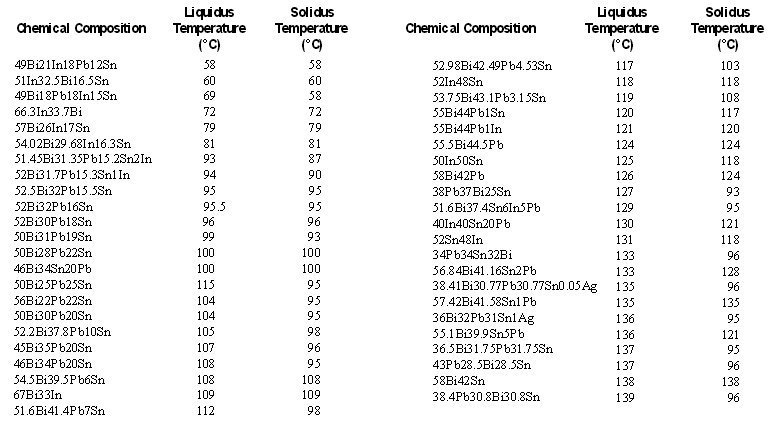
To grasp how exceptionally high these temperatures are, consider that 141 Celsius is warmer than the melting points of more than 45 different solder alloys.
These two new formulations resulted from expanding the unit cell of the 129C superconductor announced in March 2015. One extra Sn-Cu-O2 layer was added to reach 136C and two extra Sn-Cu-O2 layers were added to reach 141C.
Original Submission
- Read More...
- 22 comments
Let's Encrypt has announced the generation of root and intermediate certificates, share the public keys, and show the layout of their operational structure. The keys are RSA (the Rivest, Shamir, and Adleman algorithm) for now with ECDSA (Elliptic Curve Digital Signature Algorithm) versions coming later this year.
The root certificates are for the Internet Security Research Group (ISRG) and separately for the Online Certificate Status Protocol (OCSP) for the ISRG. OCSP is described in RFC 6960 and used for revocation of certificates.
The intermediate certificates are for two different intermediate Let's Encrypt CA (Certificate Authority) servers named/numbered X1 and X2. These are cross-signed by the IdenTrust root CA for ease of deployment and use by existing browsers without the need for any modifications until the browsers add the ISRG root CA through updates. The Let's Encrypt intermediate CA X2 is only intended for disaster recovery in case of a non-functional X1. The Let's Encrypt announcement has a schematic of the structure.
The target is (or was) to launch the Let's Encrypt service in the second quarter of 2015 (which ends this month) and they plan on further announcements during the next few weeks.
Original Submission
- Read More...
- 28 comments
from the dont-like-the-rules?-change-the-game dept.
An appeals court ruled the NSA's bulk collection was illegal. Rand Paul prevented the controversially named Patriot Act from being renewed, even if it was replaced a couple days later by the equally contentiously named "USA Freedom Act".
Mission accomplished? Not so fast:
The Obama administration has asked a secret surveillance court to ignore a federal court that found bulk surveillance illegal and to once again grant the National Security Agency the power to collect the phone records of millions of Americans for six months. The legal request, filed nearly four hours after Barack Obama vowed to sign a new law banning precisely the bulk collection he asks the secret court to approve, also suggests that the administration may not necessarily comply with any potential court order demanding that the collection stop.
Maybe some branches of the government are more equal than others?
Original Submission
- Read More...
- 41 comments
Tired of seeing [abstract only] on SoylentNews? Try searching for the title on the Library Genesis search engine.
TorrentFreak reports that the academic publishing giant Elsevier has filed a complaint in a New York District Court to attempt to shut down the Library Genesis and SciHub.org search engines:
According to Elsevier the company is losing revenue because of these sites, so in order to stem the tide the publisher has filed a complaint [PDF] at a New York federal court hoping to shut them down.
"Defendants are reproducing and distributing unauthorized copies of Elsevier's copyrighted materials, unlawfully obtained from ScienceDirect, through Sci-Hub and through various websites affiliated with the Library Genesis Project," the complaint reads. "Specifically, Defendants utilize their websites located at sci-hub.org and at the Libgen Domains to operate an international network of piracy and copyright infringement by circumventing legal and authorized means of access to the ScienceDirect database," it adds.
According to Elsevier, the websites access articles by using unlawfully obtained student or faculty access credentials. The articles are then added to the "pirate" library, backed up on their own servers.
Tom Allen, President of the Association of American Publishers (AAP), informs TF that websites such as Libgen pose a threat to the quality of scientific publications, as well as the public health. "Scholarly publishers work to ensure the accuracy of the scientific record by issuing corrections and revisions to research findings as needed; Libgen typically does not," Allen says. "As a result, its repository of illegally obtained content poses a threat to both quality journal publishing and to public health and safety."
The court has yet to decide whether the injunctions should be granted, but considering outcomes in recent piracy cases there's a good chance this will happen. For the time being, however, the Libgen and Sci-hub websites remain online.
Original Submission
- Read More...
- 22 comments